
Automation Technology
ABB Robotics has launched its new PoWa collaborative robot family, and it is a useful signal of where factory automation jobs are heading next.
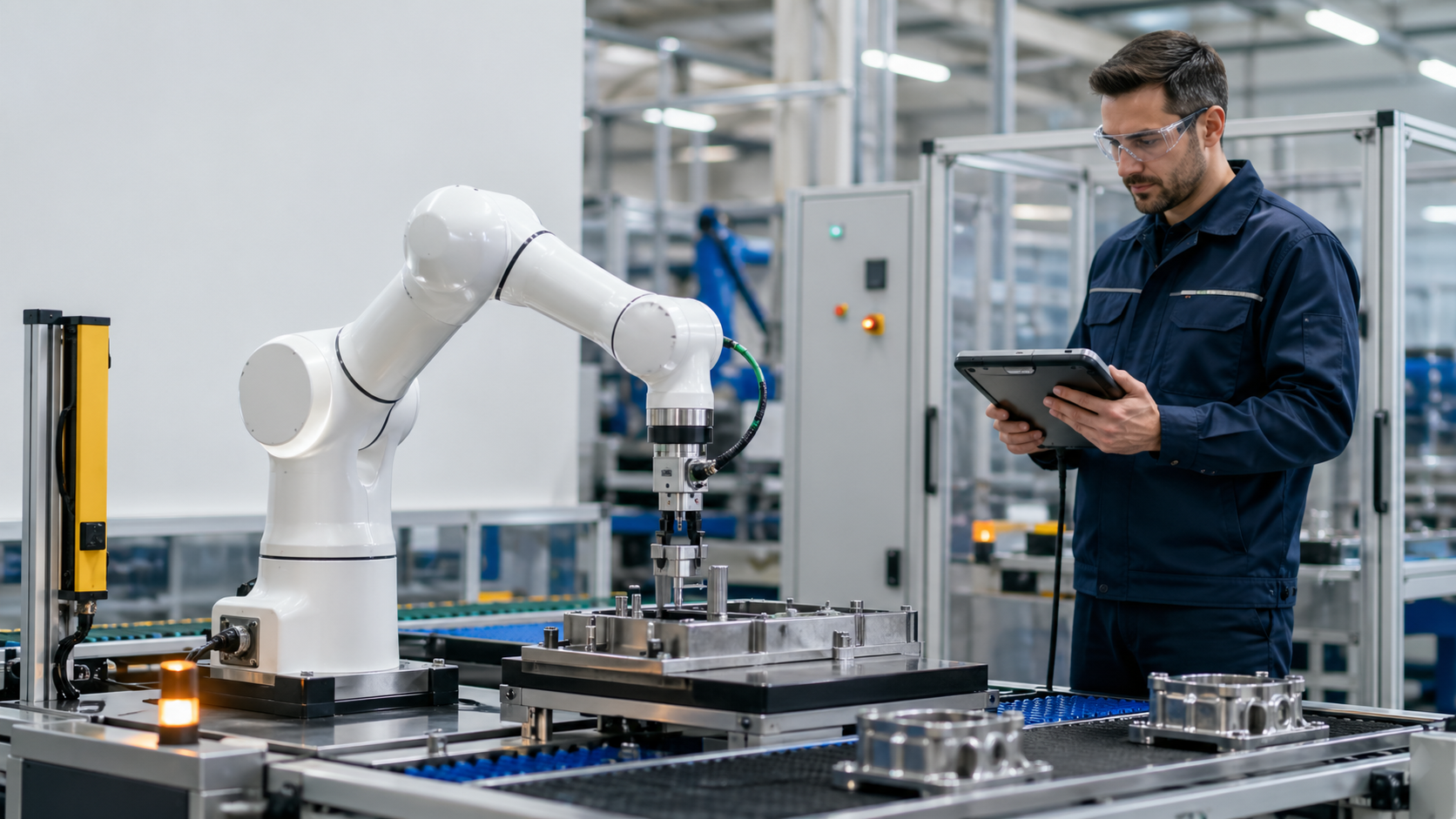
For years, many people thought of cobots as small, slower robots for light-duty pick-and-place work. That picture is changing. ABB says the PoWa lineup spans payloads from 7 kg to 30 kg, reaches speeds above 5 m/s, and is aimed at industrial applications such as machine tending, palletizing, material handling, screwdriving, inspection, and arc welding.
That does not make cobots a magic answer for every plant. It does mean more production processes are becoming realistic automation targets, especially in facilities where traditional robot cells may have felt too large, too complex, or too expensive to justify.
Why This Matters For Manufacturers
The most interesting part of PoWa is not only the speed or payload rating. It is the combination of higher industrial performance with easier deployment. ABB describes the system as powered by its OmniCore controller platform and integrated with tools such as RobotStudio, AppStudio, AI-assisted software, and Wizard Easy Programming.
That mix is aimed at both large manufacturers and smaller companies starting their automation journey. Smaller plants often do not have a deep bench of robotics engineers, controls specialists, and maintenance technicians waiting for the next project. They need systems that can be deployed faster, supported more easily, and adjusted when production changes.
But easier deployment does not remove the need for skill. It changes where skill shows up.
Easier Programming Still Needs Automation Knowledge
No-code tools and plug-and-play accessories can reduce friction, especially for common tasks. They can help operators and technicians make basic changes without writing robot code from scratch. That is good news for adoption.
On the plant floor, though, a robot is rarely working alone. It is part of a larger cell. There may be conveyors, fixtures, safety scanners, guarding, grippers, weld equipment, vision systems, PLC logic, HMI screens, quality checks, and production reporting around it.
That is where demand for skilled people keeps growing. A robot programmer still needs to understand reach, payload, tooling, path planning, cycle time, interference zones, recovery moves, and what happens when the real part does not behave like the simulation. A controls engineer still has to connect the cell to the rest of the line. An industrial electrician still has to keep power, sensors, panels, and safety devices working reliably. An automation technician still has to troubleshoot the messy middle between mechanical, electrical, controls, and production.
The Skill Mix Is Broadening
As collaborative robots become faster and more capable, factories will need more people who understand the full automation stack. That includes cobots, PLCs, safety, tooling, machine vision, conveyors, welding, machine tending, maintenance, and practical production troubleshooting.
The best candidates will not be defined only by one brand of robot or one programming tool. They will be the people who can make a system work after it leaves the demo booth and enters a real production environment.
- Robot programmers who can support cobot cells, offline programming, recovery routines, and production-ready motion.
- Controls engineers who can integrate robot cells with PLCs, HMIs, safety systems, and upstream or downstream equipment.
- Industrial electricians and automation technicians who can troubleshoot sensors, wiring, field devices, panels, and machine behavior on the floor.
- Manufacturing teams that understand how automation affects cycle time, quality, changeovers, maintenance, and operator workflow.
What Job Seekers Should Take From This
The takeaway is simple: collaborative robots are becoming more industrial. They are getting faster, stronger, and more practical for applications that used to sit closer to traditional robot territory.
For people building careers in factory automation, that is a good sign. The market will still need specialists, but it will also reward people who can cross boundaries: robotics plus PLCs, programming plus troubleshooting, controls plus safety, and equipment knowledge plus production judgment.
If you are watching automation jobs, this is the direction to pay attention to. The tools may become easier to start with, but the plants adopting them will still need people who can make the whole system run.
Use this guide
Turn this into a live robotics job search
Compare current openings near Ontario, then save an alert so new reviewed PLC, controls, robotics, industrial electrical, commissioning, and field service roles come to you.